
Living with diabetes doesn't mean sacrificing taste, variety, or the joy of eating. In fact, with the right nutritional strategy centered around plant-based protein, you can enjoy delicious foods while maintaining stable blood sugar levels and sustained energy throughout the day.
This comprehensive guide explores how plant-based protein can be your most powerful ally in diabetes management, offering practical insights, scientific backing, and actionable strategies you can implement today.
Understanding the Protein-Diabetes Connection
Why Protein Matters for Blood Sugar Control
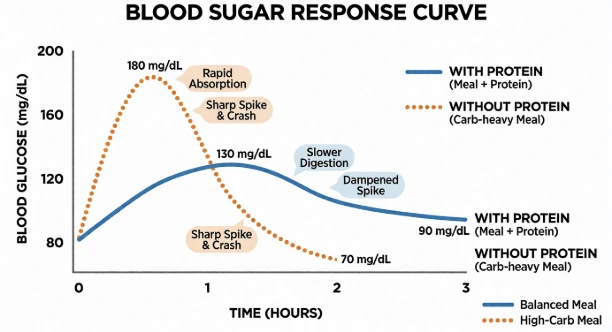
When you consume carbohydrates, your body breaks them down into glucose, causing blood sugar levels to rise. Protein, however, behaves differently. It has minimal impact on blood glucose while providing essential benefits that make it crucial for diabetes management.
Key Benefits of Protein for Diabetics:
- Slows glucose absorption: Protein delays stomach emptying, preventing rapid blood sugar spikes
- Reduces post-meal glucose peaks: Studies show that protein consumed with carbohydrates can reduce blood sugar elevation by up to 35%
- Increases satiety: Helps you feel fuller longer, reducing unnecessary snacking and calorie intake
- Preserves lean muscle mass: Critical for maintaining metabolic health and insulin sensitivity
- Supports weight management: High-protein diets have been shown to aid in weight loss, which improves diabetes outcomes
The Science Behind Plant-Based Protein and Diabetes
Research published in the Journal of Diabetes Investigation found that plant-based diets are associated with a 23% lower risk of developing type 2 diabetes. But why are plant proteins particularly beneficial?
Unique Advantages of Plant Protein:
- Lower in saturated fat: Unlike animal proteins, plant sources contain minimal saturated fat, which can improve insulin sensitivity
- Rich in fiber: Most plant protein sources come packaged with dietary fiber, further slowing glucose absorption
- Contains beneficial phytonutrients: Antioxidants and anti-inflammatory compounds that support overall metabolic health
- Easier on the kidneys: Important consideration for diabetics who may have compromised kidney function
- Heart-protective: Reduces cardiovascular risk, a major concern for people with diabetes
Best Plant-Based Protein Sources for Diabetics
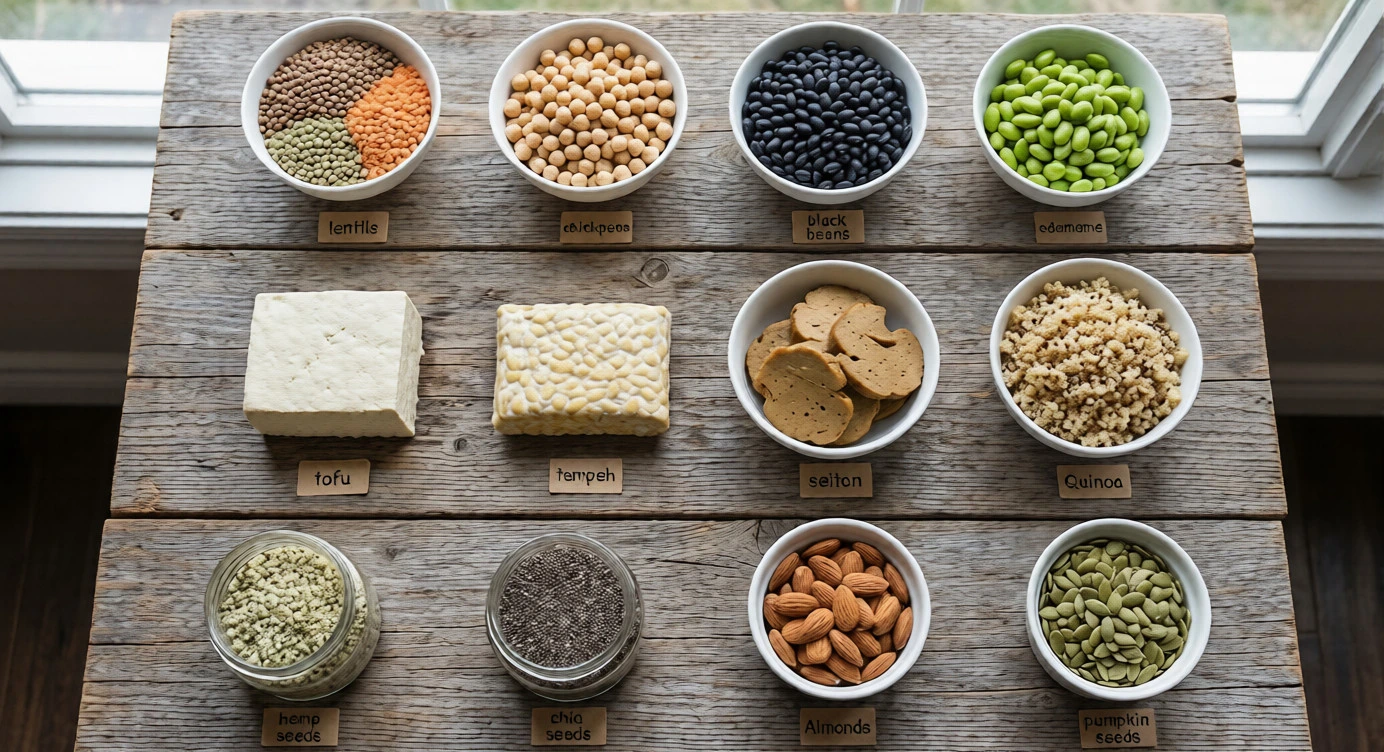
Complete Protein Sources
1. Quinoa (8g protein per cooked cup)
This ancient grain is a complete protein containing all nine essential amino acids. With a low glycemic index of 53, quinoa provides sustained energy without blood sugar spikes.
How to use: Replace rice, add to salads, or enjoy as breakfast porridge with cinnamon and nuts.
2. Soy Products (Tofu: 20g per cup, Tempeh: 31g per cup)
Soy is one of the few plant foods that rivals animal protein in quality. Research shows that soy protein can improve glycemic control and reduce LDL cholesterol.
How to use: Scrambled tofu for breakfast, tempeh stir-fry for dinner, or edamame as a protein-rich snack.
3. Hemp Seeds (10g protein per 3 tablespoons)
These tiny seeds pack a powerful protein punch and contain omega-3 fatty acids that reduce inflammation associated with diabetes.
How to use: Sprinkle on yogurt, blend into smoothies, or add to muesli bowls.
Complementary Protein Sources
4. Lentils and Legumes (18g protein per cooked cup)
Lentils, chickpeas, black beans, and kidney beans are nutritional powerhouses. Their high fiber content (15-16g per cup) makes them exceptional for blood sugar control.
Glycemic Impact: Lentils have a remarkably low glycemic index of 32, making them one of the best carbohydrate choices for diabetics.
How to use: Dal, hummus, bean salads, or roasted chickpea snacks.
5. Nuts and Seeds (Almonds: 6g per ounce, Chia seeds: 5g per ounce)
Beyond protein, nuts provide healthy fats that improve insulin sensitivity. A study in Circulation Research found that consuming nuts regularly reduced diabetes risk by 27%.
Best choices: Almonds, walnuts, cashews, pumpkin seeds, and sunflower seeds.
Portion control tip: Stick to a small handful (1-1.5 ounces) to avoid excessive calorie intake.
6. Peas and Chickpea Flour (Peas: 8g per cup, Besan: 22g per cup)
Green peas and chickpea-based products offer protein plus resistant starch that feeds beneficial gut bacteria, improving metabolic health.
How to use: Pea-based protein powders, besan chilla (savory pancakes), or chickpea pasta.
How Much Protein Do Diabetics Need?
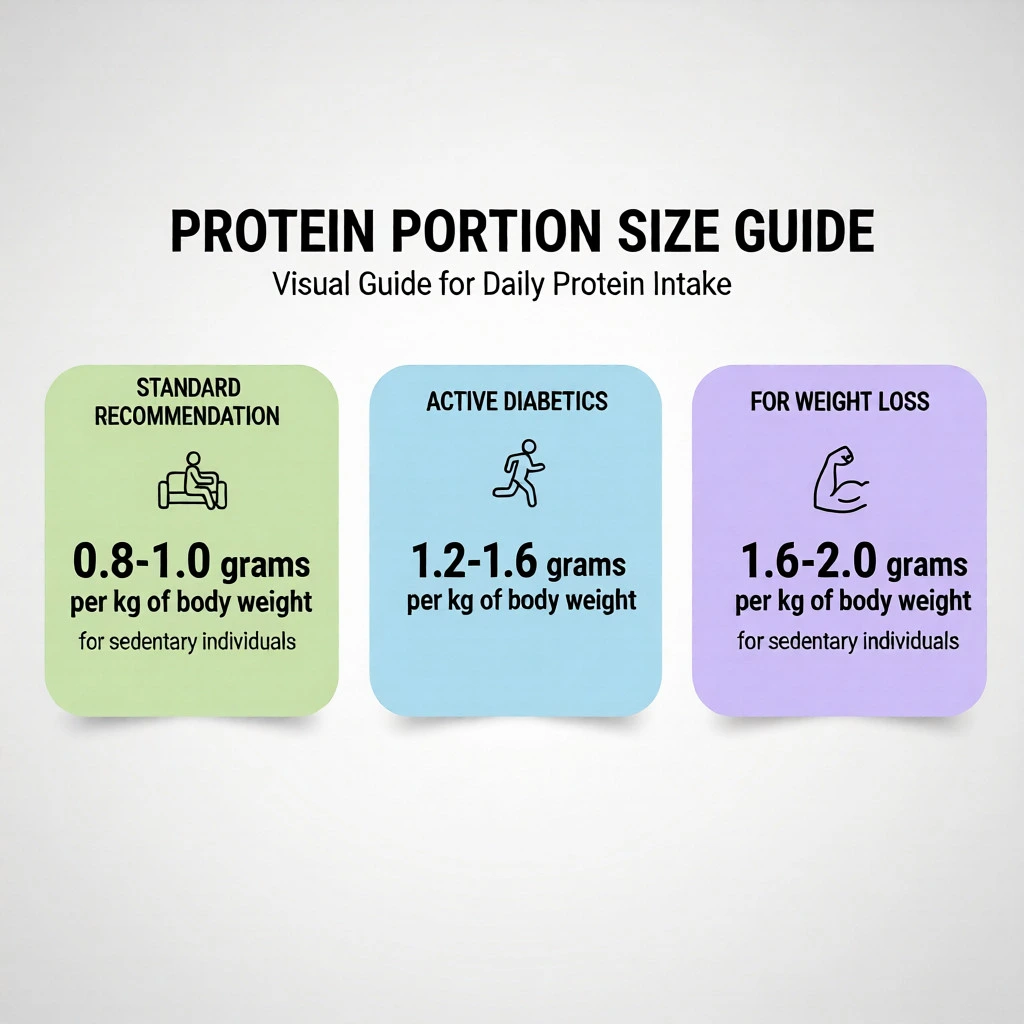
The recommended protein intake varies based on individual factors, but general guidelines suggest:
Standard Recommendation: 0.8-1.0 grams per kilogram of body weight for sedentary individuals
Active Diabetics: 1.2-1.6 grams per kilogram of body weight
For Weight Loss: 1.6-2.0 grams per kilogram of body weight
Example Daily Protein Targets:
- 60 kg person: 72-120g protein daily
- 75 kg person: 90-150g protein daily
- 90 kg person: 108-180g protein daily
Distribution Strategy: Spread protein intake across all meals (20-30g per meal) for optimal blood sugar control and muscle protein synthesis.
Timing Your Protein Intake for Optimal Blood Sugar Control
The Protein-First Strategy
Research from Weill Cornell Medical College demonstrated that eating protein before carbohydrates can reduce post-meal blood sugar by up to 73% compared to eating carbs first.
Practical Application:
- Start meals with a protein-rich salad or soup
- Have a few bites of your protein laddoo or protein bar before your main meal
- Combine protein with every carbohydrate serving
Strategic Meal Timing
Breakfast: The most important meal for protein
- Aim for 25-30g of protein at breakfast
- Reduces hunger hormones and cravings throughout the day
- Improves insulin sensitivity for subsequent meals
Lunch: Moderate protein with complex carbs
- 20-25g protein
- Pair with fiber-rich vegetables and whole grains
Dinner: Lighter protein portion
- 20-25g protein
- Earlier dinners (before 7 PM) improve overnight blood sugar control
Snacks: Protein-centered options
- 10-15g protein
- Prevents between-meal blood sugar crashes
- Examples: Protein bars, roasted chickpeas, nut butter on apple slices
Plant-Based Protein Meal Plan for Diabetics
Day 1: Balanced Blood Sugar Blueprint
Breakfast (7:00 AM)
- Protein muesli bowl with unsweetened almond milk (20g protein)
- Topped with chia seeds, hemp hearts, and berries
- One tablespoon almond butter
- Green tea or black coffee
Mid-Morning Snack (10:30 AM)
- Plant-based protein bar (12-15g protein)
- Handful of raw almonds
Lunch (1:00 PM)
- Quinoa and chickpea Buddha bowl (25g protein)
- Mixed greens, roasted vegetables, tahini dressing
- Small portion of brown rice or sweet potato
Afternoon Snack (4:00 PM)
- Protein laddoo (10g protein)
- Cucumber and carrot sticks
Dinner (7:00 PM)
- Yellow moong dal with vegetables (18g protein)
- Small whole wheat roti or cauliflower rice
- Side salad with pumpkin seeds
Evening Snack (Optional, 9:00 PM)
- Chamomile or cinnamon tea
- Small portion of roasted makhana (fox nuts)
Total Protein: ~95-100g
Day 2: High-Protein Variation
Breakfast
- Tofu scramble with vegetables (22g protein)
- One slice sprouted grain bread
- Herbal tea with cinnamon
Mid-Morning Snack
- Green smoothie with pea protein powder (20g protein)
- Spinach, cucumber, ginger, lime
Lunch
- Black bean and vegetable wrap (20g protein)
- Whole grain tortilla, lettuce, tomatoes, avocado
- Side of roasted Brussels sprouts
Afternoon Snack
- Date-sweetened protein shake (15g protein)
- Made with unsweetened plant milk
Dinner
- Lentil and vegetable curry (20g protein)
- Cauliflower rice
- Cucumber raita with soy yogurt
Total Protein: ~97g
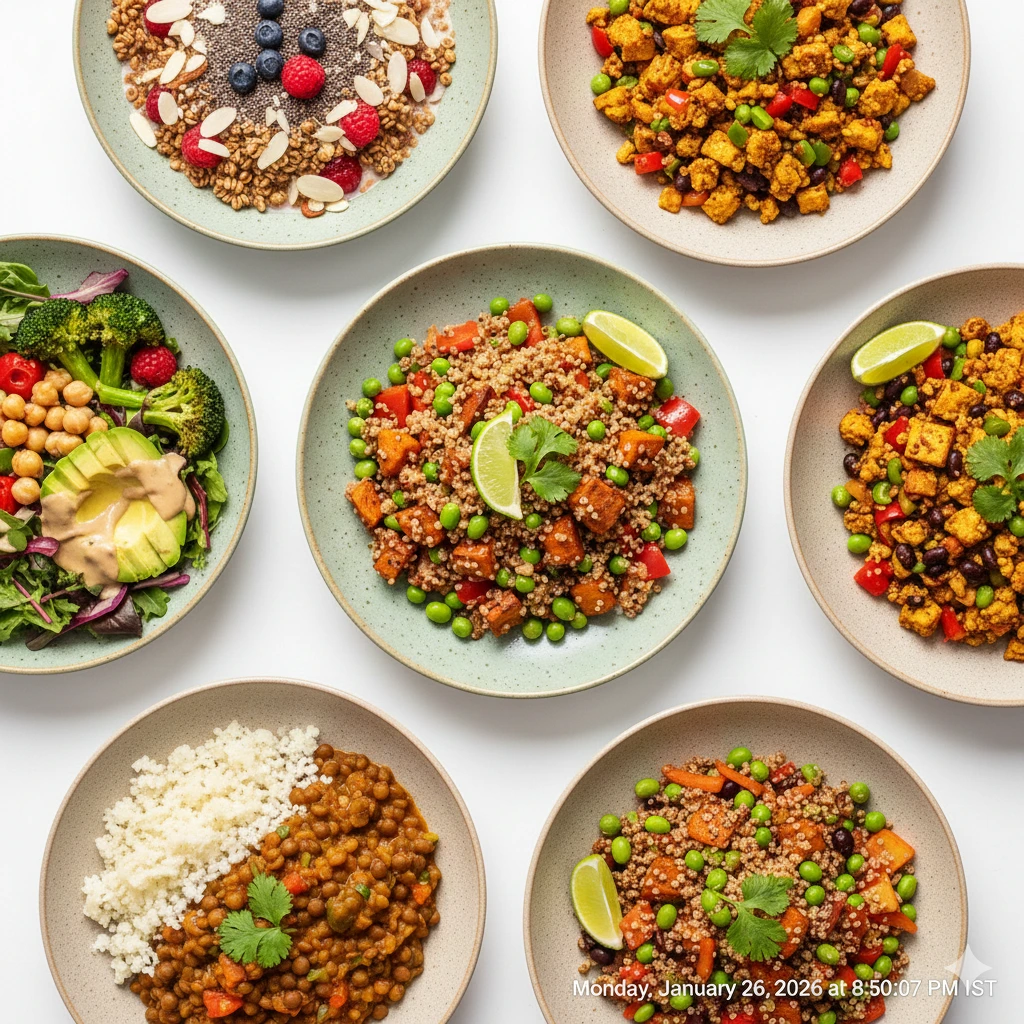
Creating Your Own Diabetes-Friendly Protein Combinations
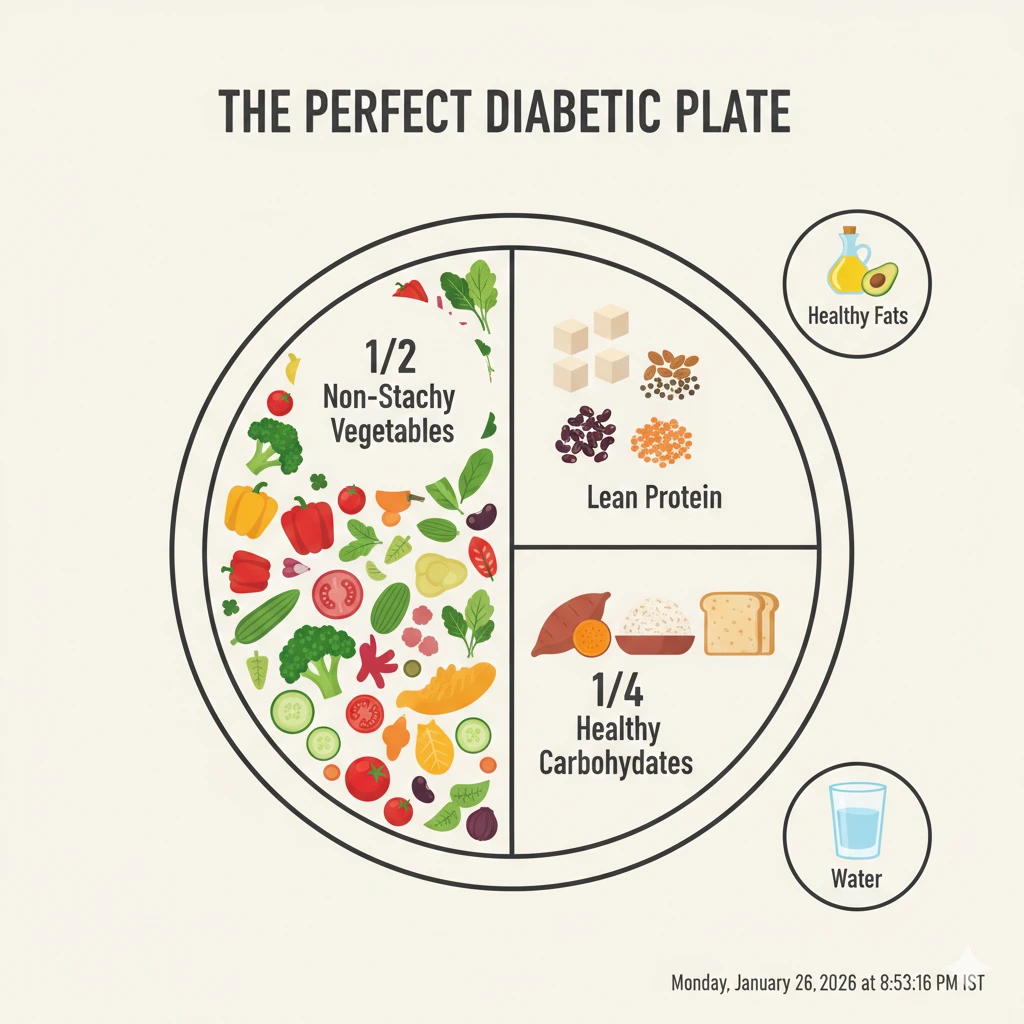
The Perfect Plate Formula
For optimal blood sugar control, structure your meals using this proven formula:
50% Non-Starchy Vegetables
- Leafy greens, broccoli, cauliflower, peppers, zucchini, tomatoes
- Provides volume, fiber, and nutrients with minimal carb impact
25% Lean Protein
- Plant-based sources discussed above
- Keeps you satisfied and stabilizes blood sugar
25% Smart Carbohydrates
- Whole grains, legumes, or starchy vegetables
- Paired with protein and fiber to minimize glucose spikes
Protein Pairing Strategies
For Complete Amino Acid Profile:
- Rice + Lentils (dal chawal)
- Hummus + Whole wheat pita
- Peanut butter + Whole grain bread
- Bean chili + Quinoa
- Stir-fried tofu + Brown rice
For Maximum Satiety:
- Protein + Healthy Fats + Fiber
- Example: Chickpeas + Tahini + Cucumber (hummus)
- Example: Protein bar with nuts + Apple with skin
Common Mistakes to Avoid
1. Relying Solely on Protein Powders
While convenient, whole food sources provide additional nutrients, fiber, and phytochemicals that powders lack. Use protein supplements strategically, not as meal replacements.
Better approach: Use protein powders for post-workout recovery or busy mornings, but prioritize whole foods for main meals.
2. Ignoring Carbohydrate Content in Plant Proteins
Many plant proteins (especially legumes) contain significant carbohydrates. This isn't necessarily bad, but you need to account for them in your meal planning.
Solution: Monitor your total carb intake from all sources and adjust portions accordingly. Use your blood glucose meter to see how different foods affect you personally.
3. Not Drinking Enough Water
High-protein diets increase water requirements. Dehydration can worsen blood sugar control and kidney function.
Recommendation: Drink at least 8-10 glasses of water daily, more if you're active or live in a hot climate.
4. Skipping Meals to "Save" Carbs
This strategy backfires by causing blood sugar drops, intense hunger, and eventual overeating. Regular protein-rich meals maintain stable glucose levels.
Better strategy: Eat smaller, protein-centered meals every 3-4 hours.
5. Choosing Processed "Health Foods"
Not all protein bars, veggie burgers, or meat alternatives are created equal. Some contain added sugars, refined oils, and artificial ingredients.
Solution: Read labels carefully. Look for products with:
- No added sugar or dates/jaggery as sweeteners
- Whole food ingredients you recognize
- At least 10g protein per serving
- Less than 15g net carbs per serving
Enhancing Absorption: Getting the Most from Plant Proteins
Digestibility Considerations
Plant proteins generally have lower digestibility than animal proteins due to anti-nutrients like phytates and lectins. However, proper preparation dramatically improves absorption.
Preparation Techniques:
Soaking: Reduces phytates in legumes and nuts by 50-70%
- Soak beans and lentils 8-12 hours before cooking
- Soak nuts 4-8 hours to improve digestibility
Sprouting: Increases protein quality and reduces anti-nutrients
- Sprout mung beans, chickpeas, or lentils for 2-3 days
- Boosts vitamin content and enzyme activity
Fermentation: Enhances nutrient availability
- Choose tempeh over tofu when possible
- Include fermented foods like idli, dosa batter
Cooking: Breaks down complex proteins
- Pressure cooking legumes improves digestibility
- Avoid overcooking vegetables to preserve nutrients
Combining with Absorption Enhancers
Vitamin C: Increases iron absorption from plant proteins
- Add lemon juice to dal
- Include bell peppers in bean dishes
- Tomatoes with lentil curry
Vitamin D: Supports protein metabolism
- Get 15-20 minutes of morning sunlight
- Consider supplementation if deficient
Probiotic Foods: Improve gut health and nutrient absorption
- Fermented pickles, sauerkraut
- Plant-based yogurt with live cultures
Real-World Success Stories: Plant Protein and Diabetes Reversal
Case Study 1: Reducing Medication Through Diet
Rajesh, a 52-year-old with type 2 diabetes, struggled with HbA1c levels around 8.5% despite medication. After transitioning to a plant-based, high-protein diet:
Results after 6 months:
- HbA1c reduced to 6.2%
- Lost 18 kg
- Reduced diabetes medication by 50%
- Improved energy levels and eliminated afternoon crashes
His strategy: Focused on lentils, tofu, and protein-rich snacks like protein laddoos and bars throughout the day, completely eliminating refined carbohydrates.
Case Study 2: Prediabetes Prevention
Meera, diagnosed with prediabetes at age 45, implemented a protein-first eating strategy.
Results after 4 months:
- Fasting glucose normalized from 118 to 92 mg/dL
- Lost 12 kg without feeling deprived
- Improved sleep quality
- Reduced inflammation markers
Her strategy: Started every meal with protein, incorporated protein muesli for breakfast, and used plant-based protein bars as strategic snacks.
Note: These are illustrative examples. Individual results vary, and any dietary changes should be made under medical supervision.
Addressing Special Considerations
Kidney Health and Protein Intake
There's a common misconception that high-protein diets harm kidneys. Current research shows this is not true for people with healthy kidney function. However, if you have diabetic nephropathy (kidney disease):
Guidelines:
- Consult with a nephrologist before increasing protein
- May need to limit to 0.8g per kg body weight
- Choose high-quality proteins to maximize benefit at lower intake
- Monitor kidney function markers regularly
Digestive Comfort
Some people experience bloating or gas when increasing plant protein, especially from legumes.
Solutions:
- Increase intake gradually over 2-3 weeks
- Use digestive enzymes (alpha-galactosidase) with bean meals
- Cook legumes thoroughly with cumin, fennel, or asafoetida
- Choose easier-to-digest options like red lentils or mung dal initially
- Stay hydrated to aid fiber digestion
Athletic Performance and Recovery
Active individuals with diabetes benefit from higher protein intake for muscle recovery and blood sugar stability during exercise.
Pre-Workout (1-2 hours before):
- Small protein snack (10-15g)
- Prevents hypoglycemia during exercise
- Example: Half a protein bar with a small piece of fruit
Post-Workout (within 30 minutes):
- 20-30g protein
- Supports muscle recovery and glycogen replenishment
- Example: Protein shake with banana or protein laddoo with plant milk
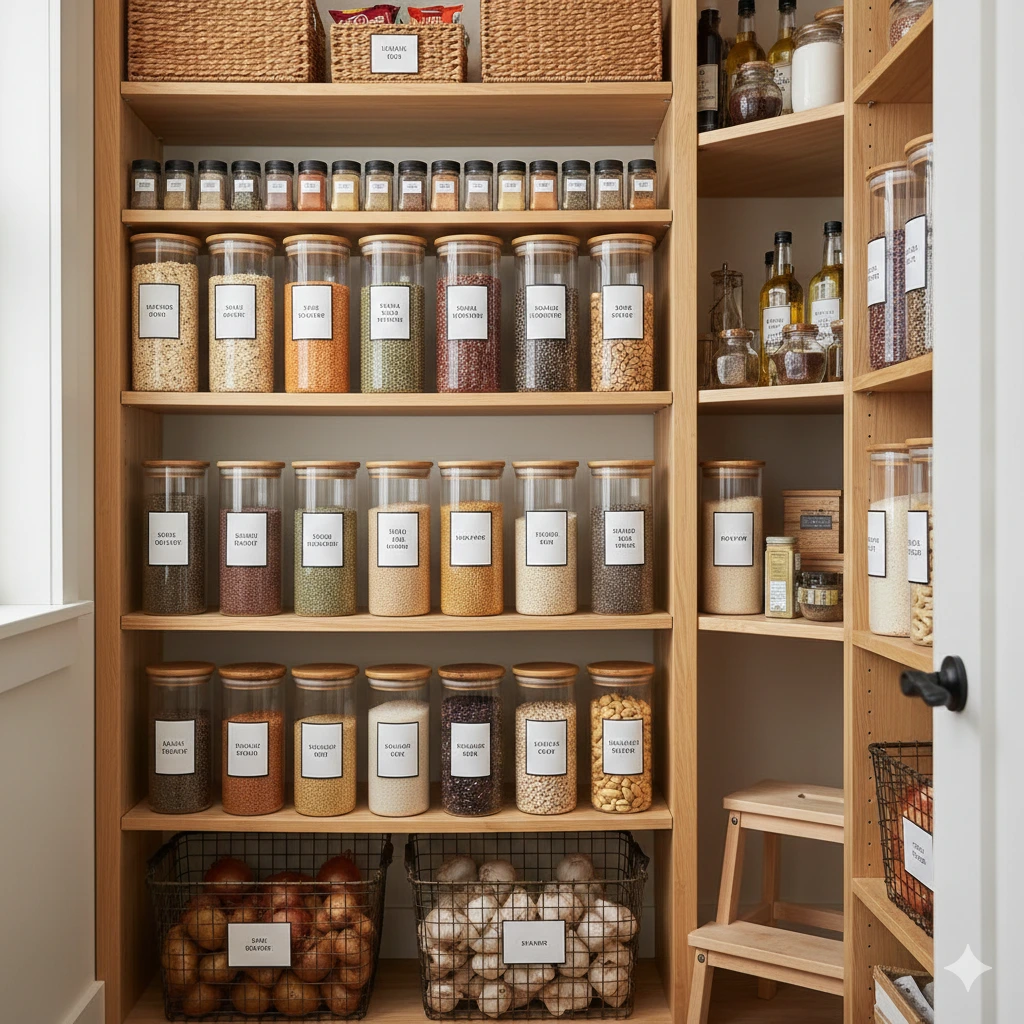
Shopping Guide: Building Your Plant-Protein Pantry
Essential Staples
Dry Goods:
- Multiple varieties of lentils (red, yellow, green, black)
- Dried chickpeas, black beans, kidney beans
- Quinoa and amaranth
- Oats (steel-cut or rolled)
- Chia seeds, hemp seeds, flax seeds
Refrigerated:
- Tofu (firm and silken varieties)
- Tempeh
- Unsweetened plant milk
- Plant-based yogurt (no added sugar)
Pantry:
- Natural nut butters (almond, peanut, cashew)
- Tahini
- Nutritional yeast
- Sprouted grain bread (freeze for freshness)
Convenience Options:
- Sugar-free protein bars
- Protein laddoos (date-sweetened)
- Plant-based protein powder (pea, hemp, or brown rice)
- Roasted chickpeas or edamame snacks
Smart Shopping Tips
Read Labels for:
- Protein content (aim for at least 5g per serving for snacks)
- Net carbohydrates (total carbs minus fiber)
- Added sugars (should be zero or from dates/jaggery in moderation)
- Ingredient list length (shorter is usually better)
Budget-Friendly Choices:
- Buy dried legumes in bulk (much cheaper than canned)
- Choose seasonal vegetables
- Make your own protein snacks when possible
- Store nuts and seeds in the freezer to extend shelf life
Quick and Easy Diabetes-Friendly Protein Recipes
5-Minute Protein Power Breakfast
Ingredients:
- 1/2 cup protein muesli
- 1 cup unsweetened almond milk
- 1 tablespoon hemp seeds
- 1 tablespoon almond butter
- Handful of berries
- Dash of cinnamon
Nutrition: ~25g protein, 35g carbs, 8g fiber
15-Minute High-Protein Lunch
Chickpea and Spinach Scramble:
- 1 cup cooked chickpeas, mashed
- 2 cups fresh spinach
- 1/4 cup diced tomatoes
- Turmeric, cumin, black pepper
- 2 tablespoons tahini drizzle
Nutrition: ~20g protein, 30g carbs, 10g fiber
10-Minute Protein Snack Ideas
- Apple with almond butter + sprinkle of hemp seeds (12g protein)
- Roasted chickpeas with spices (8g protein per 1/4 cup)
- Protein smoothie: Frozen berries + plant milk + protein powder + spinach (20-25g protein)
- Veggie sticks with hummus (6-8g protein)
- Protein laddoo with herbal tea (10-12g protein)
Monitoring Your Progress
Key Metrics to Track
Blood Glucose Monitoring:
- Fasting blood sugar (morning)
- Post-meal readings (2 hours after eating)
- Look for patterns related to protein timing and amounts
Target Ranges for Type 2 Diabetes:
- Fasting: 80-130 mg/dL
- Post-meal: Less than 180 mg/dL
- HbA1c: Below 7% (individualized based on doctor's recommendation)
Other Important Markers:
- Body weight and composition
- Energy levels throughout the day
- Hunger and satiety patterns
- Exercise performance and recovery
- Sleep quality
- Mood and mental clarity
The 2-Week Challenge
Give plant-based protein a fair trial with this structured approach:
Week 1: Establish baseline
- Track current eating patterns
- Monitor blood sugar 3-4 times daily
- Note energy levels and hunger patterns
Week 2: Implement changes
- Increase protein at each meal
- Use protein-first eating strategy
- Track the same metrics
What to expect:
- More stable blood sugar throughout the day
- Reduced cravings and hunger between meals
- Better energy and mental clarity
- Possible improvements in fasting glucose
Frequently Asked Questions
Q: Can I get enough protein on a plant-based diet? A: Absolutely. Many plant foods are protein-rich, and when combined strategically, provide all essential amino acids. Athletes and bodybuilders successfully build muscle on plant-based diets.
Q: Will plant protein raise my blood sugar? A: Protein has minimal direct impact on blood glucose. However, some plant protein sources contain carbohydrates (legumes, quinoa), which you should account for in your meal planning.
Q: How quickly will I see results? A: Many people notice improved energy and reduced cravings within days. Blood sugar improvements typically become evident within 1-2 weeks. HbA1c changes take 2-3 months to reflect in lab tests.
Q: Do I need to take supplements? A: While a well-planned plant-based diet can meet most needs, consider testing for and potentially supplementing:
- Vitamin B12 (essential for vegans)
- Vitamin D (if limited sun exposure)
- Omega-3 (algae-based EPA/DHA)
- Zinc and iron (if deficient)
Q: Can I eat protein bars every day? A: Yes, if they're made with quality ingredients and no added sugar. However, prioritize whole foods for most meals and use protein bars as convenient snacks or emergency options.
Q: What about protein powder quality? A: Look for third-party tested products free from heavy metals and contaminants. Choose organic when possible, and avoid products with artificial sweeteners or excessive added ingredients.
The Path Forward: Your Personalized Action Plan
Week 1-2: Foundation Building
- Calculate your personal protein needs
- Stock your pantry with plant-protein staples
- Begin tracking blood sugar and meals
- Experiment with protein-first meal timing
Week 3-4: Optimization
- Identify your favorite protein sources and meals
- Establish consistent meal timing
- Fine-tune portions based on blood sugar response
- Develop go-to snack and meal combinations
Month 2-3: Integration
- Make plant-based protein eating automatic
- Expand your recipe repertoire
- Check HbA1c and other markers
- Adjust approach based on results
Ongoing Success
- Continue monitoring and tracking
- Stay connected with healthcare team
- Adjust as needed for lifestyle changes
- Share your success and help others
Conclusion: Empowerment Through Nutrition
Managing diabetes doesn't mean deprivation—it means making informed, empowered choices about what you eat. Plant-based protein offers a powerful tool for stabilizing blood sugar, maintaining energy, and improving overall health.
The journey to better diabetes management through plant-based protein is personal. What works perfectly for one person may need adjustment for another. Use this guide as your foundation, but listen to your body, work with your healthcare team, and track what works for you.
Remember these key takeaways:
- Protein is your stabilizing force for blood sugar management
- Plant-based sources offer unique benefits beyond just protein
- Timing and distribution matter as much as total intake
- Whole foods should be your foundation, with convenient options as support
- Consistency creates results—give changes time to work
- You're not alone in this journey
Every meal is an opportunity to nourish your body, stabilize your blood sugar, and move toward better health. Start with one change today—perhaps swapping your evening snack for a protein laddoo or adding lentils to your lunch. Small, consistent actions compound into transformative results.
Your diabetes doesn't define you, but how you manage it can redefine your health, energy, and quality of life. Plant-based protein is not just food—it's fuel for the vibrant, energetic life you deserve.
Medical Disclaimer: This article is for informational purposes only and is not intended to replace professional medical advice, diagnosis, or treatment. Always consult with your healthcare provider before making significant dietary changes, especially if you're taking diabetes medications. Blood sugar responses vary individually, and medication adjustments may be necessary when changing your diet.
About Aanandam: At Aanandam, we're committed to making healthy eating convenient and delicious for people managing diabetes and other health conditions. Our range of plant-based protein bars, laddoos, muesli, and other products are crafted with no added sugar, certified ingredients, and a focus on functional nutrition that supports your wellness journey.
Ready to start your plant-based protein journey? Explore our diabetes-friendly protein range, from convenient protein bars to traditional laddoos, all designed to support stable blood sugar and sustained energy throughout your day.
